
1
Gita
The art of vocal music - training the voice in raga, tala, and sargam. Covers classical forms such as Dhrupad and Khayal as well as devotional bhajans and stotras.
The Chatushashti Kalas are the 64 classical arts of Hindu civilisation, set out by Vatsyayana in Chapter 1.3 of the Kamasutra and referenced in the Agni Purana, the Vishnu Purana, and the Shukraniti. They form a comprehensive taxonomy of human creative and intellectual capability - from singing and painting to metallurgy, cryptography, gardening, and the staging of plays.
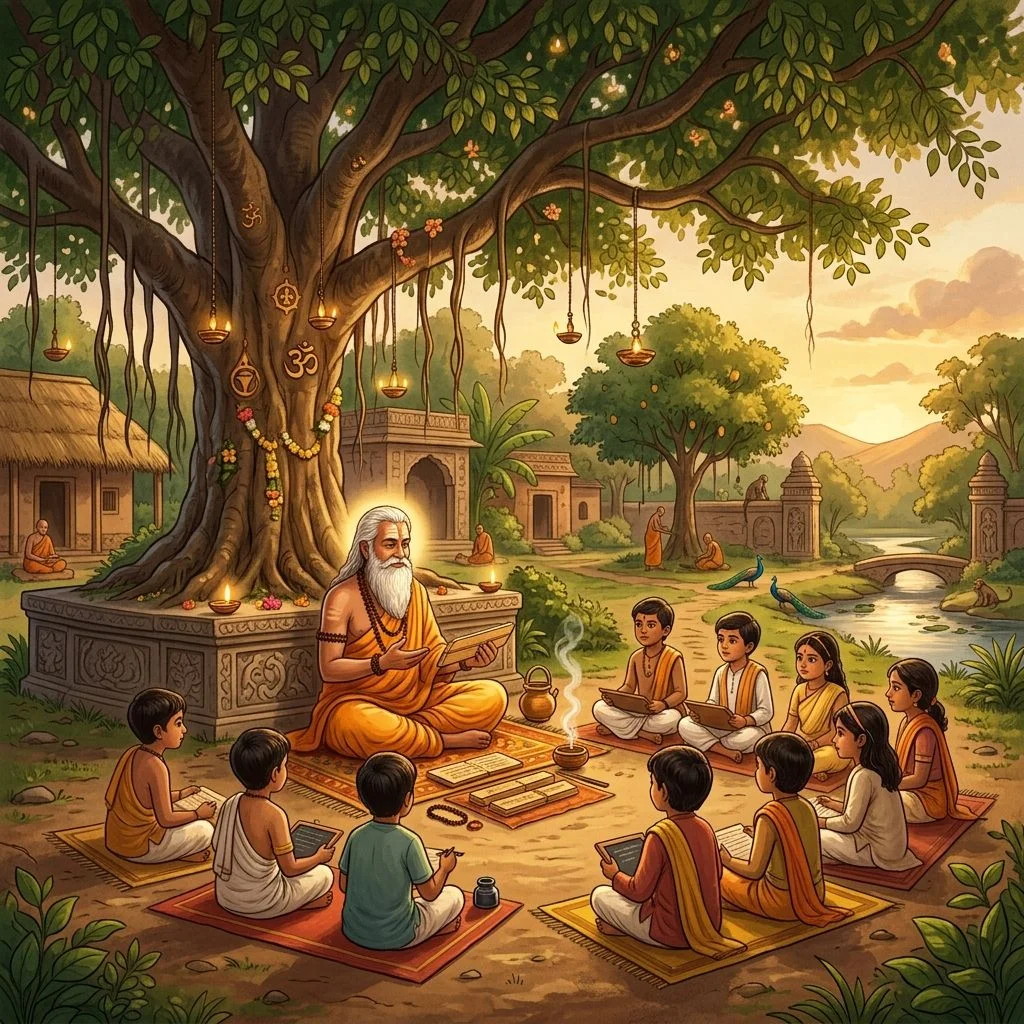
Why study them - A cultivated person (nagaraka, literally "a man of the town") was expected to have training in many of these kalas, and the Kamasutra declares that a woman versed in the 64 arts is "honoured everywhere." These were not idle accomplishments - they constituted the civilisational curriculum (shiksha) transmitted in gurukulas and court academies, the bedrock of social, ritual, and economic life.
Sources - Vatsyayana Kamasutra 1.3 · Agni Purana · Shukraniti
Modern equivalents - In modern disciplines the kalas map roughly to: vocal and instrumental music (Gita, Vadya), classical dance and theatre (Nritya, Natya), painting and visual arts (Alekhya, Chitra-yoga), architecture and civil engineering (Vastu-vidya, Yantra-matrika), gemology and metallurgy (Ratna-pariksha, Dhatu-vada), and applied linguistics and cryptography (Desha-bhasha-jnana, Mlecchita-vikalpa).
Voice, instrument, dance, drama, and the recital arts - the kalas of public performance.
The art of vocal music - training the voice in raga, tala, and sargam. Covers classical forms such as Dhrupad and Khayal as well as devotional bhajans and stotras.
The art of playing musical instruments across the four classical families: tata (stringed), susira (wind), avanaddha (drums), and ghana (metallophones). Mastery included the veena, venu-flute, mridangam, and cymbals.
The art of classical dance - the coordinated expression of nritta (pure movement), nritya (expressive dance), and natya (dramatic dance). Foundational to all the recognised classical forms.
The art of drama and theatre - combining speech, abhinaya (gesture), costume, and staging. Governed by Bharata Muni's Natya Shastra, the so-called "fifth Veda".
The art of water-instruments such as the jala-taranga - tuned bowls of water struck with thin sticks to produce melodic tones. One of the most delicate of the classical instruments.
Skilled performance on specific instruments - the veena (lute) and the damaru (small two-headed drum). The veena was the instrument of Saraswati, the damaru of Shiva.
The art of reading aloud - reciting poetry, scriptural texts, and stories with correct pronunciation, intonation, and emotive expression. A skilled reader could hold an audience by voice alone.
The art of staging short plays and narrative storytelling - presenting natikas (one-act plays) and akhyayikas (story-cycles) before an audience. The kathakara tradition descends from this kala.
Painting, colour-mixing, literary composition, and the higher arts of aesthetic creation.
The art of painting - rendering forms with charcoal, mineral pigments, and vegetable dyes on wall plaster, cloth, or palm-leaf. Covers portraiture, landscape, and iconographic depictions of deities.
The art of cutting and applying decorative forehead-marks (visheshaka) and tilakas in coloured paste. Essential to ritual occasions, festivals, and the daily toilet of the cultivated person.
The science of mixing colours - combining mineral and organic pigments to produce permanent hues, tints, and shades. Includes the preparation of indigo, vermilion, orpiment, and lapis-lazuli for artistic use.
The art of riddles - composing and solving riddles, puns, and word-play in Sanskrit and the regional tongues. A polite drawing-room amusement among learned company.
The art of completing verse-puzzles. Given the first or last quarter of a shloka, the participant must compose the remaining three quarters in correct metre and apt sense.
The art of extempore poetic composition - composing verses mentally on a given theme, deity, or feeling without pen or pause. A favourite display of nagaraka cultivation.
Knowledge of lexicography and prosody - of dictionaries (kosha) such as the Amarakosha, and of metres (chandas). Foundational to literary composition and criticism.
The art of varying literary form - recasting a prose tale as verse, or a verse as prose; converting one metre into another while preserving sense. A demanding exercise in literary craft.
Handicrafts of garland, needle, cane, spindle, and timber - the daily work of the artisan.
The art of arranging flower-beds and floral coverings - laying fresh flowers and petals over beds, seats, and ceremonial spaces. The rangoli of petals on thresholds is a related form.
The art of garland-making - stringing marigolds, jasmine, roses, and sacred tulasi into malas of varying patterns. Technique varied by flower, thread, and the deity to be honoured.
The art of needle-work and embroidery - stitching, mending, and decorating cloth with coloured threads. Produced both functional clothing and ornamental textile art.
The art of thread-puppetry - manipulating figurines on strings to perform stories from the itihasas and puranas. The classical antecedent of India's many marionette traditions.
The art of cane, bamboo, and reed work - weaving baskets, mats, screens, and small furniture from cane and bamboo. A workaday craft expected even of the cultivated householder.
The art of spinning - drawing thread from cotton, silk, or wool on the tarku (spindle) or charkha. The foundation of all textile arts and a daily household occupation.
The art of carpentry - shaping, joining, and finishing wood into doors, furniture, ploughs, chariots, and household items. The sthapati and takshaka were respected village artisans.
The art of building flower-chariots - constructing miniature carriages or palanquins decorated entirely in fresh flowers, used in spring festivals and bridal processions.
Architecture, mining, metallurgy, gemology, languages, and the classical knowledge-systems.
The science of architecture and spatial arrangement - designing buildings, temples, and settlements according to Vastu Shastra so that cosmic energies (prana) harmonise with the occupants' wellbeing.
The science of testing silver and gems - assessing the purity of metals and the authenticity of precious stones (diamonds, rubies, emeralds, pearls) by lustre, hardness, and refractive quality.
The science of metallurgy - smelting, alloying, casting, and hammering metals such as gold, silver, copper, and bronze. Included the panchaloha five-metal alloy used for temple icons.
Knowledge of the colours and grades of gems - recognising the planetary correspondences, medicinal properties, and ritual uses of each navagraha-stone according to jyotisha.
Knowledge of mines and mineral deposits - recognising where gold, silver, copper, iron, and gemstones were to be found, and the elementary geology of ore-bearing rocks.
The science of arboriculture and horticulture - planting, grafting, watering, and tending trees and gardens. Includes the medicinal botany set out in the Vrikshayurveda of Surapala.
Knowledge of regional languages - speaking and reading the major prakrits and provincial tongues of the subcontinent, useful for trade, travel, and diplomatic life.
The science of omens and portents (shakuna-shastra) - reading the cries of birds, the directions of animals, and atmospheric signs to forecast the success of journeys and undertakings.
Cooking, beverage-craft, perfumery, jewellery, and the refined arts of the household.
The art of preparing offerings from rice and flowers - shaping cooked rice, flower petals, and grain into bali-balls, rangoli patterns, and naivedyam arrangements for daily worship.
The art of personal grooming - colouring the teeth (with betel and lac), dyeing garments with natural dyes such as turmeric and saffron, and the application of cosmetic pigments to the body.
The art of mosaic flooring - inlaying coloured stones, gems, and terracotta pieces into floor surfaces in geometric or floral patterns. Temple forecourts and palace floors were adorned by this craft.
The art of bed-making - arranging mattresses, cushions, coverings, and fragrant flowers for restful and auspicious sleep. The bedchamber was considered an expression of refined domestic culture.
The art of perfumery - preparing scented oils, agarbatti, attars, and aromatic pastes from sandalwood, saffron, musk, and floral extracts for personal use, worship, and the perfuming of garments.
The art of arranging jewellery - selecting and combining ornaments for the ears, neck, hair, wrists, waist, and ankles according to the occasion, season, and the wearer's natural complexion.
The art of cooking varied dishes - preparing the six tastes in harmonious combinations: vegetables (shaka), broths (yusha), and savoury delicacies (bhakshya) for daily meals and feasts.
The art of preparing beverages - fruit-juices (panaka), syrups (rasa), and the lightly fermented drinks (ragasava) appropriate to season and occasion. Includes the etiquette of serving guests.
Dress, etiquette, conversation games, verse-capping, and the graces of cultivated company.
The art of arranging head-ornaments - placing diadems, flower-fillets, and jewelled hair-pieces upon coiffed hair. Different occasions and ranks called for different combinations.
The art of dressing and the green-room - preparing costume, ornament, and makeup for self or others before performance or ceremony. The classical equivalent of the modern dresser-stylist.
The art of folding decorative ear-ornaments from leaves and petals - fashioning earring-shapes from palmyra leaf, banana fibre, and fresh flowers for festive wear.
The verse-capping game - each player must recite a new verse beginning with the last syllable of the previous one. A favourite parlour pastime among the literate classes.
The art of tongue-twisters - composing and reciting phrases that are deliberately difficult to pronounce. A social entertainment that doubled as elocutionary practice.
The art of training parrots, mynahs, and other speaking birds - teaching them to repeat words, names, and short verses for the amusement of the household and its guests.
The art of washing and dressing the hair - cleansing with herbal pastes (shikakai, reetha, amla), oiling, combing, and arranging the hair in classical styles such as the keshabandha.
The science of etiquette and discipline (vinaya) - the well-mannered conduct expected of a cultivated person in court, temple, and household. The grammar of polite social life.
Board games, dice, water-sports, animal contests, massage, and the games of children.
Water-games and water-throwing - the splashing sports of the rainy season and of festivals such as Holi and the spring Vasantotsava. A favourite recreation of the nagaraka.
Knowledge of the rules of ram-fighting, cock-fighting, and quail-fighting - the staging, judging, and wagering of animal contests as practised at country fairs and royal courts.
The art of therapeutic massage - kneading the limbs with oils to relieve fatigue after exercise, sport, or travel. The hands-on companion to the physical games of the gymnasium.
The art of playful disguise and trickery in games - assuming a character or feigning a mood as part of a competitive pastime. Related to indrajala but lighter in tone.
The art of disguising oneself through dress - changing costume to alter one's apparent class, age, or even gender, for theatrical games and the playful festivals of spring.
The art of dice and gambling - skilled play of dice-games such as those described in the Mahabharata. Considered a worldly pastime that the nagaraka should know but exercise with restraint.
The art of board-games such as chess (chaturanga / shatranj), chaupar, and ashtapada - strategic games of capture and movement that trained the mind in foresight and counter-play.
The making of toys and games for children - small wooden figures, clay carts, spinning tops, and string-puppets. Looking after the play of children was itself counted among the kalas.
Magic, sleight of hand, cryptography, memory training, mechanical devices, and physiognomy.
The art of magic and stage-conjuring - illusions, vanishing acts, and the performance of seemingly impossible feats to entertain and astound. Distinct from genuine tantra, indrajala is theatrical illusion.
The cosmetic transformations attributed to the sage Kauchumara - the use of pastes, oils, and herbal preparations to alter complexion, conceal blemishes, and rejuvenate the skin.
Sleight of hand - quick-fingered dexterity used in conjuring, juggling, and the deft handling of small objects. The technical companion to indrajala.
The art of finger-cipher communication - conveying messages silently through coded movements of the fingers and palm. Used in diplomacy, intrigue, and tantric initiation.
The art of secret or "foreign" writing - composing and deciphering coded scripts so that messages can be read only by the initiated. The classical Indian science of cryptography.
The science of mechanical devices and automata - constructing water-clocks, mechanical birds, hydraulic toys, and siege engines, as described in the Arthashastra's chapters on yantras.
The art of memory-training - mnemonic systems for retaining long texts, lists of names, and the procedural details of ritual. The traditional foundation of all gurukula learning.
The art of sympathetic reading - interpreting the character, fortune, and feelings of others from the face, gait, and bodily marks. Related to samudrika-shastra, the classical science of physiognomy.
Note - These 64 arts represent the classical ideal of a complete education in Hindu civilisation. Different textual sources give slightly varying lists; the enumeration here follows Vatsyayana's Kamasutra Chapter 1.3 as the most widely cited primary source, cross-referenced with the Agni Purana and Shukraniti traditions.
See also - Natya Shastra & Indian classical arts · Sanskrit foundations · Ayurveda · Back to all wisdom topics
Commission a Saraswati Pooja
Invoke the goddess of all 64 arts - Saraswati
A Saraswati Homa blesses students of any discipline. Photo proof returned.