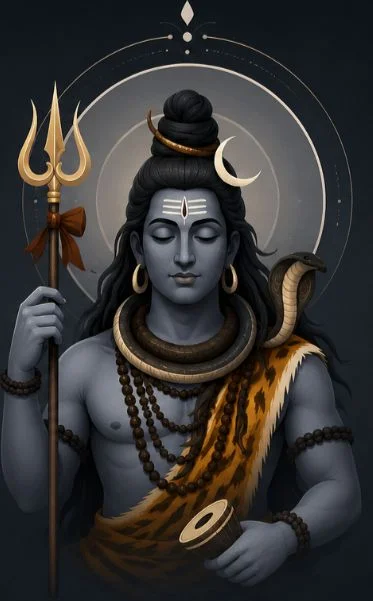
1. What the word means
Rudra is the fiercely compassionate Vedic name of Shiva - the storm-lord who removes obstruction by destroying its cause. Abhishekais a sacred bath. Together, Rudrabhishek is the act of bathing the deity while invoking Rudra through the Sri Rudram hymn - eleven anuvakas drawn from the Krishna Yajurveda’s Taittiriya Samhita.
The ritual’s power is held to come from three things at once: the vibrational density of the mantra, the substance of the dravya being poured, and the devotee’s sankalpa.
2. When it is offered
- Mondays - Shiva’s weekday
- Pradosham - the 13th lunar day, twice a month, considered the most auspicious window for Shiva worship
- Maha Shivaratri - the great night of Shiva, falling on Phalguna Krishna Chaturdashi
- Shravan month - the entire month is sacred to Shiva; full ekadasha-rudra cycles are common
- Family birth-stars and tithis - to invoke Shiva’s blessing on a specific household member
- Pitru-related obligations - Rudrabhishek for ancestors during Pitru Paksha
3. The eleven dravyas
Each dravya carries a traditional intent. While the exact list varies by sampradaya, the most widely-followed sequence is:
- Jala (water) - purification of intent
- Kshira (milk) - health and longevity
- Dadhi (curd) - strong progeny
- Ghrita (ghee) - victory over adversities
- Madhu (honey) - wealth without struggle
- Sharkara (sugar) - release from sorrow
- Ikshu rasa (sugarcane juice) - accomplishment of goals
- Narikela jala (tender coconut water) - peace of mind
- Panchamrita - moksha (liberation)
- Bhasma - detachment, dispassion
- Pure water - clean closure
4. The vidhi (procedure)
- Sankalpa - the priest names the place, time, devotee’s gotra, name, and the intent of the ritual.
- Ganapati pooja - invocation of Ganesha to remove obstacles before the main ritual.
- Nyasa - placement of mantras across the priest’s body to consecrate his role.
- Sri Rudram - recitation of eleven anuvakas; each anuvaka pairs with one dravya pour.
- Chamakam - the “may we receive” supplement to Sri Rudram, often recited after.
- Mangala arati - closing camphor flame to the deity.
- Prasada distribution - devotees receive theertha and bhasma.
5. Variants - laghu, maha, ati-rudra
- Ekadasha Rudrabhishek - one cycle of Sri Rudram with eleven dravyas, ~90 minutes.
- Laghu Rudra - eleven recitations of Sri Rudram, ~4-6 hours.
- Maha Rudra - eleven Laghu-Rudras (121 recitations), typically over multiple days with multiple priests.
- Ati-Rudra Maha Yajna - eleven Maha-Rudras (1331 recitations), a community-scale event spanning ~11 days.
6. Offering it online
On SevaCart you select a verified Shiva temple, submit the sankalpa fields (name, gotra, nakshatra, intent), and choose the scale - Ekadasha, Laghu, or Maha Rudra. The temple priest performs the ritual; you receive a photograph of the abhisheka in progress and, optionally, an audio recording of the Sri Rudram chant in which your name was offered.
Browse Rudrabhishek sevas → · What is sankalpa? → · Find a muhurta →
7. If you do not know your gotra or nakshatra
The priest can use Kashyapa gotraas a default if your family’s gotra is unknown, and skip the nakshatra reference if needed. The ritual is still complete and valid. See our primer on gotra if you want to find yours.
8. Inside Sri Rudram - Namakam and Chamakam
Sri Rudram has two halves. The Namakam - named for its ceaseless refrain namo… namah(“salutations, salutations”) - salutes Rudra in every conceivable form: the fierce and the gentle, the lord of mountains and rivers, of healers and even of thieves. Its teaching is radical: the divine pervades everything, so nothing is outside reverence. The Panchakshari mantra Namah Shivaya sits at the heart of the eighth anuvaka, and the Mahamrityunjaya verse (Tryambakam yajamahe…) also appears within the hymn.
The Chamakam is the counterpart - its refrain cha me… cha me(“and may this be granted to me”) is a great litany asking for health, progeny, grain, cattle, learning, and spiritual goods alike. Namakam offers surrender; Chamakam receives grace. A full Rudrabhishek chants both.
9. What devotees seek through it
By intent, Rudrabhishek is offered for:
- Health - freedom from chronic or recurring illness, through the Mahamrityunjaya connection within the hymn.
- Graha shanti - easing afflictions of Mangala (Mars) or Shani (Saturn) shown in the birth chart.
- Janma-nakshatra shanti - a birth-star blessing, often on one’s nakshatra day.
- Removal of debt and obstruction - Rudra as the destroyer of the cause, not just the symptom.
- Progeny and family welfare, and peace for ancestors during Pitru Paksha.
The scale chosen - Ekadasha to Maha Rudra - usually tracks the weight of the sankalpa. None of this replaces medical care or practical effort; it is offered alongside them, as devotion.
10. Preparing as the sponsor (yajamana)
Even commissioning from a distance, you are the yajamana - the one for whom the rite is performed. Customary observances on the day: keep a light, sattvic diet (avoid onion, garlic, tamasic food and alcohol), hold a calm and devotional mind, and if possible light a lamp at home around the time of the chant. Receive the returned bhasma and theertha with the same respect as if you were standing in the sanctum.
These are customary, not mandatory. The priest’s vidhi carries the ritual; your sankalpa and bhava (inner attitude) carry your share of it.
11. Common questions
What does Rudrabhishek mean?
Rudrabhishek is the ritual bathing (abhisheka) of a Shiva lingam while reciting the Sri Rudram - a Vedic hymn from the Yajurveda invoking Rudra, the fierce-yet-compassionate form of Shiva. The bath is performed with one or more sacred liquids (dravyas) - milk, curd, honey, ghee, sugarcane juice, holy water - each carrying a specific spiritual outcome.
When is Rudrabhishek typically performed?
Most commonly on Mondays (Shiva day), during Shravan month (mid-July to mid-August), on Maha Shivaratri, every Pradosham (the 13th lunar day), and on Sankranti days. Family priests also recommend it on birth-stars and tithis of household members for blessings, removal of obstacles, and pitru-related obligations.
What are the eleven dravyas?
The traditional dravyas vary by sampradaya but commonly include: water (jala), milk (kshira), curd (dadhi), ghee (ghrita), honey (madhu), sugar (sharkara), sugarcane juice (ikshu rasa), tender coconut water (narikela jala), panchamrita (a mix of five), bhasma (sacred ash), and finally pure water again. Each is poured while chanting a specific mantra.
How long does Rudrabhishek take?
A standard ekadasha (eleven-fold) Rudrabhishek takes about 90 minutes including sankalpa, the eleven anuvakas of Sri Rudram, the abhisheka itself, and the closing mangala arati. An expanded eka-rudra or laghu-rudra (eleven recitations) can take 4-6 hours; a maha-rudra (eleven laghu-rudras) is a multi-day yajna.
Can Rudrabhishek be offered online from another city?
Yes. On SevaCart you choose a verified Shiva temple, submit your sankalpa (name, gotra, nakshatra, intent), and the temple priest performs the rudrabhishek on your behalf. You receive a photograph of the abhisheka in progress with your name read aloud during the sankalpa, plus a recording of the Sri Rudram chant if requested.