
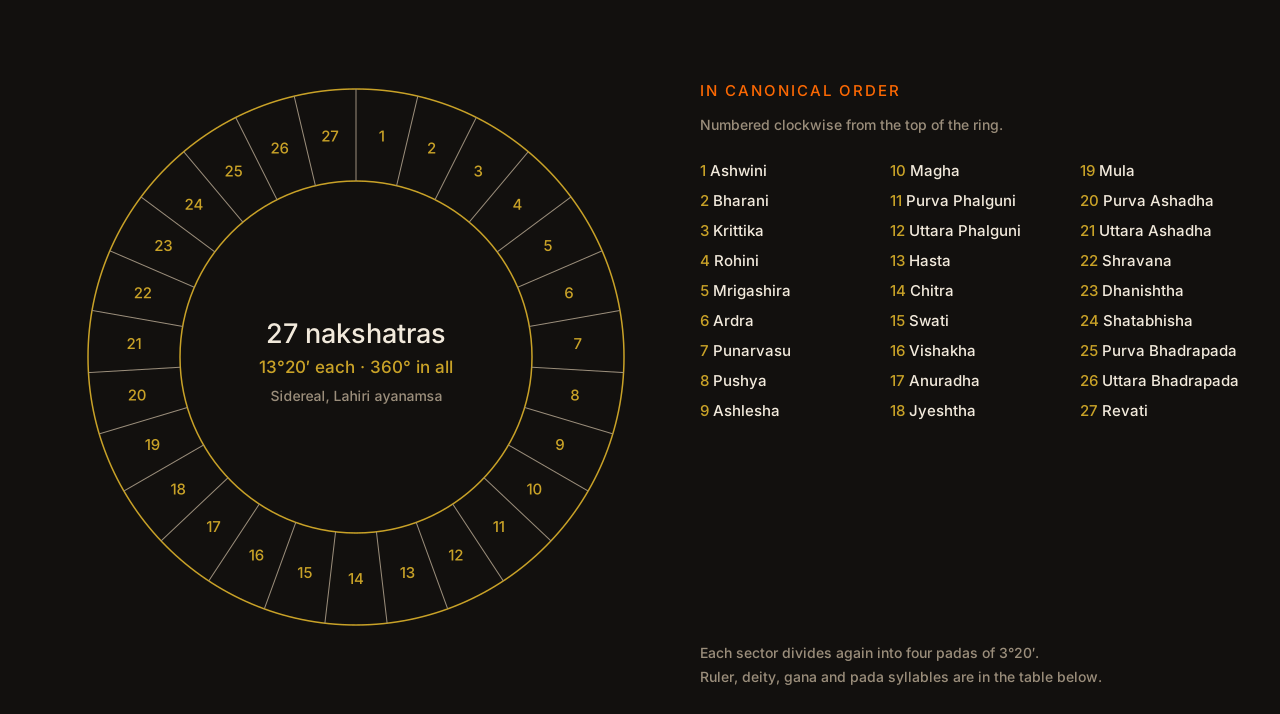
The 27-day moon cycle
The sidereal lunar month is about 27.3 days — the time the moon takes to return to the same star. Vedic astronomers divided that circuit into 27 equal arcs of 13°20′, each anchored to a fixed star or asterism. Together they tile the whole zodiac.
Every nakshatra is divided into four padas(quarters) of 3°20′. Your full birth-star identifier is nakshatra plus pada — “Rohini, 3rd pada”.
All 27 nakshatras
Ruler is the Vimshottari dasha lord. Gana is the temperament group used in marriage matching. The syllables are the namakarana name-sounds traditionally assigned to each pada — romanisation varies between regions and panchangas, so read them as a guide to recognising your own name rather than as a spelling authority.
| Nakshatra | Ruler | Deity | Gana | Pada syllables | Quality |
|---|---|---|---|---|---|
| 1. Ashwini | Ketu | Ashwini Kumaras | Deva | Chu · Che · Cho · La | Swiftness and healing; the physicians of the gods |
| 2. Bharani | Venus | Yama | Manushya | Li · Lu · Le · Lo | Restraint and the bearing of consequence |
| 3. Krittika | Sun | Agni | Rakshasa | A · I · U · E | Cutting clarity; the fire that separates |
| 4. Rohini | Moon | Brahma / Prajapati | Manushya | O · Va · Vi · Vu | Growth, fertility and the beauty of what is cultivated |
| 5. Mrigashira | Mars | Soma / Chandra | Deva | Ve · Vo · Ka · Ki | Searching and gentleness; the deer that seeks |
| 6. Ardra | Rahu | Rudra | Manushya | Ku · Gha · Nga · Chha | Storm and the transformation that follows it |
| 7. Punarvasu | Jupiter | Aditi | Deva | Ke · Ko · Ha · Hi | Return and renewal; the light that comes back |
| 8. Pushya | Saturn | Brihaspati | Deva | Hu · He · Ho · Da | Nourishment and the settled sustaining of dharma |
| 9. Ashlesha | Mercury | Sarpa / Nagas | Rakshasa | Di · Du · De · Do | Coiled, concentrated knowledge |
| 10. Magha | Ketu | Pitris (ancestors) | Rakshasa | Ma · Mi · Mu · Me | Ancestry, inheritance and the seat of the elders |
| 11. Purva Phalguni | Venus | Bhaga | Manushya | Mo · Ta · Ti · Tu | Ease, pleasure and shared good fortune |
| 12. Uttara Phalguni | Sun | Aryaman | Manushya | Te · To · Pa · Pi | Noble friendship and patronage |
| 13. Hasta | Moon | Savitar (Surya) | Deva | Pu · Sha · Na · Tha | The skilled hand; craft made useful |
| 14. Chitra | Mars | Vishvakarma / Tvashtar | Rakshasa | Pe · Po · Ra · Ri | Design and brilliance; the maker’s eye |
| 15. Swati | Rahu | Vayu | Deva | Ru · Re · Ro · Ta | Independent movement, like wind on open ground |
| 16. Vishakha | Jupiter | Indra-Agni | Rakshasa | Ti · Tu · Te · To | Determination toward a chosen goal |
| 17. Anuradha | Saturn | Mitra | Deva | Na · Ni · Nu · Ne | Steady devotion within friendship |
| 18. Jyeshtha | Mercury | Indra | Rakshasa | No · Ya · Yi · Yu | Seniority, command and the weight it carries |
| 19. Mula | Ketu | Nirriti | Rakshasa | Ye · Yo · Bha · Bhi | Roots; going to the bottom of a thing |
| 20. Purva Ashadha | Venus | Apas (water deities) | Manushya | Bhu · Dha · Pha · Dha | Invigoration and early, unbeaten strength |
| 21. Uttara Ashadha | Sun | Vishvedevas | Manushya | Bhe · Bho · Ja · Ji | Later, lasting victory; what is finished well |
| 22. Shravana | Moon | Vishnu | Deva | Ju · Je · Jo · Gha | Listening and the learning that comes by hearing |
| 23. Dhanishtha | Mars | Vasus | Rakshasa | Ga · Gi · Gu · Ge | Rhythm, abundance and resonance |
| 24. Shatabhisha | Rahu | Varuna | Rakshasa | Go · Sa · Si · Su | Wide healing; the hundred physicians |
| 25. Purva Bhadrapada | Jupiter | Aja Ekapad (Rudra form) | Manushya | Se · So · Da · Di | Fierce transformative heat |
| 26. Uttara Bhadrapada | Saturn | Ahirbudhnya | Manushya | Du · Tha · Jha · Nya | The still deep water beneath |
| 27. Revati | Mercury | Pushan | Deva | De · Do · Cha · Chi | Safe passage and arrival |
How to find yours
- From your jathaka. Every traditional birth chart lists janma-nakshatra and pada on the first page.
- From your family purohit. It is usually recorded from your jata-karma or nama-karana samskara.
- From your date, time and place of birth. Our kundli generator computes it. Birth time matters: the moon crosses one nakshatra in roughly a day and one pada in roughly six hours, so a missing time leaves the pada — and sometimes the nakshatra — undetermined.
- From your name syllable. If your traditional name was chosen at namakarana, its first syllable came from the pada. Use the table above in reverse. This is an inference, not a calculation — it narrows the answer when the birth time is lost, and it can be wrong when the name was not chosen that way.
Why it appears in every sankalpa
The sankalpa recited at the start of a formal ritual names two nakshatras: the day’s nakshatra, which places the ritual in time, and your janma-nakshatra, which names the person it is offered for.
… asmin varttamane vyavaharika [year] [ayana] [ritu] [month] [paksha] [tithi] [vara] [day’s nakshatra] yukta-divase [your nakshatra] janma-nakshatra-jata [your gotra] gotrasya [your name] aham …
Without your janma-nakshatra the sankalpa is still complete as an invocation; it is the personal identification that is missing.
Padas, syllables and the navamsa
The four padas are not decorative. Each 3°20′ pada maps onto one sign of the navamsa, the D9 divisional chart read for marriage and inner character, and the pada fixes the first syllable of a traditional name.
Pada also determines your janma-rashi: the nakshatra-and-pada combination falls inside one of the twelve rashis. Birth star and moon sign are read together, and neither is settled without the birth time that pins the pada.
Days that follow your birth star
- Janma-nakshatra day. Each lunar month, the day your birth star recurs is kept as a spiritual birthday. Many families do a short archana on it.
- Magha and Mula are particularly associated with ancestral rites.
- Gandanta nakshatras — Revati, Ashlesha and Jyeshtha — sit at junctions traditionally treated as sensitive; some rites avoid them.
- Pushya, Hasta and Anuradha are broadly considered favourable for major undertakings. Which nakshatras a particular tradition prefers varies, so a purohit’s reading of your own panchanga governs.
The three ganas and marriage matching
The 27 nakshatras group into three ganas — Deva, Manushya and Rakshasa — shown in the table above. Gana is one of the eight kootas in traditional Ashtakoota matching. Deva-Deva and Manushya-Manushya pairings are read as smooth; a Deva-Rakshasa pairing is weighed more carefully.
Gana is one factor of eight, and a single low koota is rarely decisive. Our kundli-matching tool computes the full Ashtakoota score from both birth stars.
Sidereal, not tropical, and where this table comes from
These are sidereal positions on the Lahiri ayanamsa — the frame every Indian panchanga and purohit uses. A tropical (Western) chart places the same birth about 24 degrees away, so a nakshatra read from one will not match a nakshatra read from the other.
If a Western chart and an Indian panchanga give you different answers, they are not in conflict — they are measuring from different starting points. For ritual purposes, the sidereal Lahiri calculation is the one every Indian purohit uses.
Sources
- Brihat Parashara Hora Shastra and Phaladeepika (Mantreswara) — Classical jyotisha texts. The presiding deity of each nakshatra. These are the works the platform’s own deity table was cross-checked against, and this page reads that table rather than keeping a second copy.
- The Vimshottari dasha lords, in canonical order — src/lib/ashtakoota.ts — the platform’s Ashtakoota engine. Ruler and gana are read from the same tables the kundli-matching tool computes with, so this reference and that tool cannot disagree.
- Namakarana name-syllable tables, as printed in standard panchangas — Panchanga convention. The four syllables per nakshatra. Romanisation differs between regions and between printed panchangas, so read them as a guide to recognising your own name rather than as a spelling authority.
Which nakshatras a tradition treats as favourable for a given undertaking varies, and a purohit reading your own panchanga governs over any general statement here. Nothing on this page computes a birth star; that is what the kundli generator is for.
Common questions
What is a nakshatra?
A nakshatra is one of 27 lunar mansions - a 13°20' segment of the zodiac that the moon traverses in roughly 24 hours. Each has a presiding deity, a symbol, a planetary ruler, and a set of qualities. Your janma-nakshatra is the one the moon was occupying at the moment of your birth.
How do I find my nakshatra?
Easiest: from your birth horoscope (jathaka) - ask your family priest or astrologer. Online: use a free Vedic-astrology birth-chart tool with your exact date, time, and place of birth. The result will list rashi (moon sign), nakshatra, and pada (quarter).
Why is nakshatra used in sankalpa?
The sankalpa anchors a ritual in cosmic time. Year, ayana, ritu, month, paksha, tithi, vara (weekday), and nakshatra together locate the moment astronomically. Your janma-nakshatra is part of your personal identity in the sankalpa - alongside gotra and name.
What are the 27 nakshatras in order?
Ashwini, Bharani, Krittika, Rohini, Mrigashira, Ardra, Punarvasu, Pushya, Ashlesha, Magha, Purva Phalguni, Uttara Phalguni, Hasta, Chitra, Swati, Vishakha, Anuradha, Jyeshtha, Mula, Purva Ashadha, Uttara Ashadha, Shravana, Dhanishta, Shatabhisha, Purva Bhadrapada, Uttara Bhadrapada, Revati.
Is nakshatra the same as rashi?
No. The zodiac has 12 rashis (signs) of 30° each, and 27 nakshatras of 13°20' each. Both are positions of the moon at your birth, but at different resolutions. Most rashis span about 2.25 nakshatras. Your nakshatra is the finer-grained marker; your rashi is the broader one.