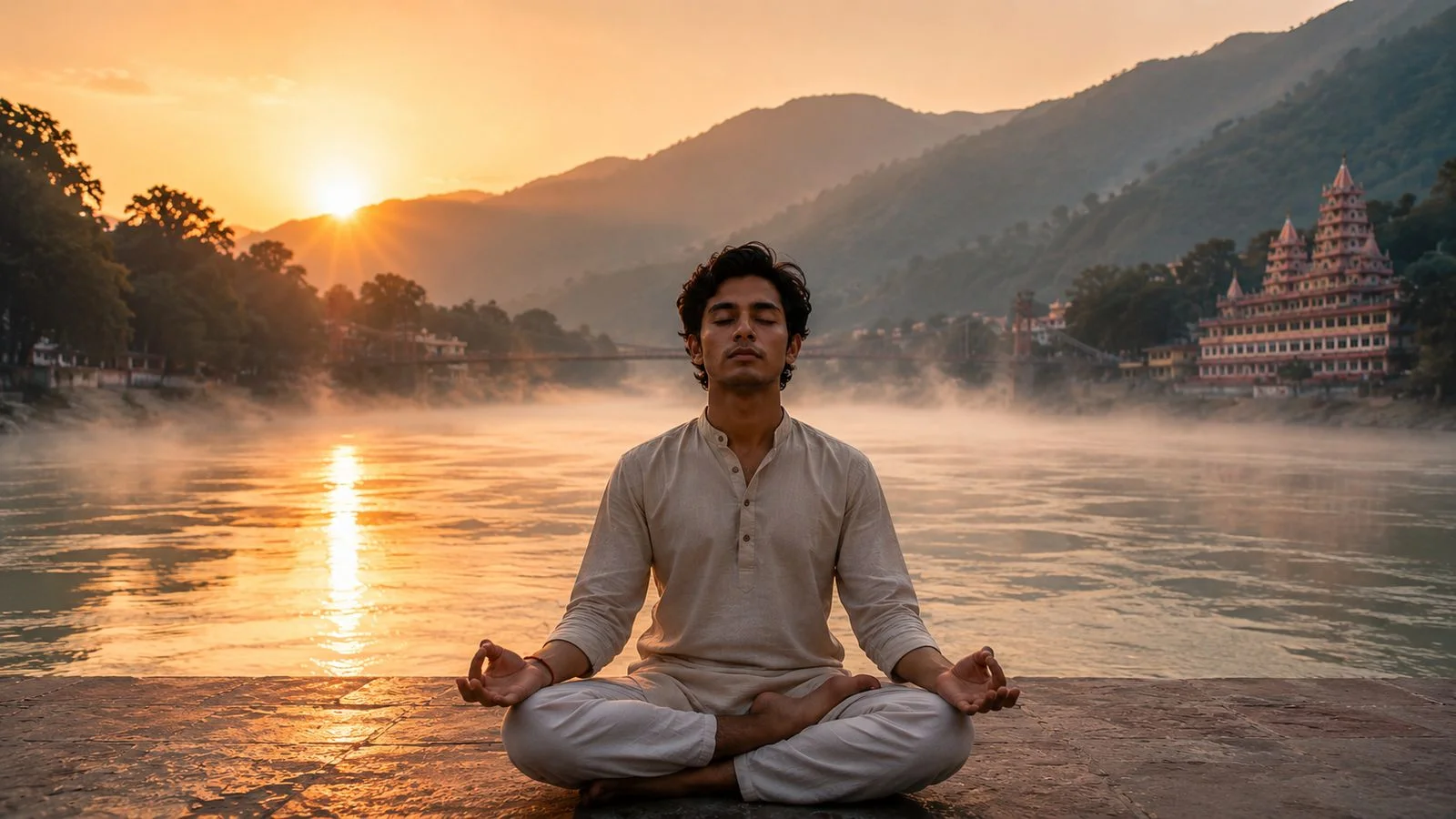
Yoga (Sanskrit: to yoke, to unite) encompasses far more than physical postures. The Bhagavad Gita outlines four cardinal paths - Karma, Bhakti, Jnana, Raja. Later tantric and post-classical traditions added Hatha, Kundalini, and Mantra/Laya. Each path suits a different temperament; most masters combine them.
By Sevasannidhi LLP·Updated 22 May 2026
Gita context: Krishna in the Bhagavad Gita tells Arjuna that all four classical paths lead to the same liberation - the difference is temperament, not destination. Ch.3 = Karma Yoga, Ch.4 = Jnana Yoga, Ch.6 = Dhyana Yoga (Raja foundation), Ch.12 = Bhakti Yoga.
The 4 classical margas (Bhagavad Gita)
Karma Yoga
कर्म योग
Gita ch.3
Nishkama karma - action without attachment to fruit
Dedicate all actions to the divine; the fruit belongs to God. The mind is purified by action done without ego-stake. Liberation through total engagement in the world.
Suits
Active, extroverted, people-oriented temperament
Key teachers
Swami Vivekananda, Swami Sivananda, Sri Aurobindo
Entry practice
Dedicate one daily act (work, cooking, any service) to your Ishta-devata. Say "Om Tat Sat" before beginning.
Bhakti Yoga
भक्ति योग
Gita ch.12
Para Bhakti - supreme devotion
Love of a personal deity as the supreme means and end. The devotee offers their whole heart; the intellect serves the heart. 9 forms (navadha bhakti): shravan, kirtan, smarana, pada-sevana, archana, vandana, dasya, sakhya, atma-nivedana.
Daily 15-minute pooja of your Ishta-devata + 108 japa of their mula-mantra.
Jnana Yoga
ज्ञान योग
Gita ch.4 + Upanishads + Brahma Sutras
Viveka-Vairagya - discrimination and dispassion
Liberation through discriminative knowledge (viveka) between the real (Atman/Brahman) and the unreal (nama-rupa). The classic method: shravan (hearing), manana (reflecting), nididhyasana (deep meditation on the truth).
Suits
Intellectual, questioning, analytical temperament
Key teachers
Adi Shankaracharya, Ramana Maharshi, Nisargadatta Maharaj
Entry practice
Daily 15-min reading of Bhagavad Gita ch.2 ("Sankhya Yoga") + 10-min Atma-Vichara ("Who am I?")
Yoga chitta vritti nirodhah - Yoga is the cessation of mental fluctuations
Systematic mastery of the mind through 8 limbs (ashtanga): Yama, Niyama, Asana, Pranayama, Pratyahara, Dharana, Dhyana, Samadhi. Complete, scientific approach to controlling the mind and attaining liberation.
Suits
Systematic, scientific, disciplined temperament
Key teachers
Patanjali (3rd C BCE), Swami Sivananda, BKS Iyengar, Swami Vivekananda (who systematised this path for the West)
Entry practice
Begin with the Yamas and Niyamas (moral + personal disciplines) before attempting advanced asana or pranayama.
The body is the vehicle of liberation. Shatkarmas (6 purifications), asana, pranayama, mudra, bandha, and samadhi. Foundation of all modern yoga styles - Iyengar, Ashtanga Vinyasa, Bikram, Yin all derive from Hatha.
Suits
Body-oriented, beginners to advanced physical practitioners
Key teachers
Swatmarama, Gorakshanatha, T Krishnamacharya (modern revival)
Entry practice
Learn Surya Namaskara + Nadi Shodhana pranayama under a qualified teacher.
Awaken the coiled Kundalini Shakti at Muladhara and guide it through 6 chakras to Sahasrara (crown). Uses bandhas, kumbhaka (breath retention), visualization, and mantra.
Suits
Advanced practitioners; requires long preparation in Hatha + Bhakti
Mantra Yoga: liberation through sustained repetition of a bija or mantra until the mind merges into sound-consciousness. Laya Yoga: dissolution (laya) of the mind into the anahata-nada (unstruck inner sound). The path of the musician and the meditator.
Suits
Musical, auditory, contemplative temperament
Key teachers
Swami Nada Brahmananda, various Nada yoga masters
Entry practice
Begin with Ajapa-Japa (Soham/Hamsa) - 21-min daily practice.
At a glance - path comparison
Path
Vehicle
Primary text
Best for
Karma Yoga
Action
Gita ch.3
Active, world-engaged
Bhakti Yoga
Devotion
Gita ch.12
Emotional, heart-centred
Jnana Yoga
Knowledge
Upanishads, Gita ch.4
Intellectual
Raja Yoga
Mind
Yoga Sutras
Systematic, scientific
Hatha Yoga
Body
HYP, Gheranda Samhita
Physical practitioners
Kundalini Yoga
Shakti
Gorakshashataka
Advanced + initiated
Mantra/Laya
Sound
Nada-Bindu Upanishad
Musical, meditative
How to choose your path
Temperament: Head → Jnana, Heart → Bhakti, Hands → Karma, Body → Hatha
Most masters recommend combining all four classical paths; they complement each other.
The Gita does not prescribe one path exclusively - Krishna answers Arjuna's specific question.
For householders: daily japa + scripture reading + one karma-seva suffices for steady progress.
For Kundalini: require initiation from a qualified guru; do not attempt from books or YouTube alone.
Sources:Content compiled from classical Sanskrit sources and the lived tradition of partner institutions.
Accuracy:Provided for educational + informational purposes. Sevasannidhi LLP / SevaCart accepts no responsibility for decisions taken based on this content.
Disclaimer:This tool is provided for educational + informational purposes only. Results should not be construed as professional astrological, medical, legal, financial, or architectural advice. Sevasannidhi LLP / SevaCart accepts no responsibility for decisions or actions taken based on the output of this tool. For ritually-precise or legally-binding decisions (marriage, property, medical, financial), please consult a qualified teacher in the relevant tradition or other relevant licensed professional.
Privacy:Inputs are processed server-side to compute your result. When you pay to unlock a result, that result and the birth details behind it are saved to your account so you can re-open it later without paying again - you can delete any saved result at any time. Free results are not saved to your account.