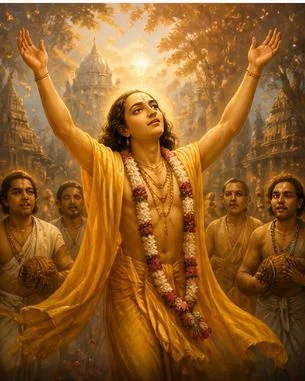
Chaitanya Mahaprabhu
Gauranga
Krishna is the highest reality. The relationship between Krishna and soul is simultaneously one and different in a way the human mind cannot grasp - therefore acintya, inconceivable.
The teaching
Loving devotion to Radha-Krishna, expressed through public chanting (sankirtana) of the maha-mantra "Hare Krishna Hare Krishna Krishna Krishna Hare Hare / Hare Rama Hare Rama Rama Rama Hare Hare", is the only and complete path in this Kali Yuga. Chaitanya himself wrote almost nothing - eight verses, the Shikshashtaka - but his disciples (the Six Goswamis of Vrindavan) produced an enormous body of theology.
Major works
- Shikshashtaka - eight verses (the only direct composition)
- Krishna Das Kaviraja · Chaitanya Charitamrita - primary biography and theology
- Rupa Goswami · Bhakti Rasamrita Sindhu - codification of devotional aesthetics
- Jiva Goswami · Sat Sandarbha (Shad Sandarbha) - six theological treatises
- Sanatana Goswami · Brihad Bhagavatamrita
What he changed
- Reframed the maha-mantra as the central practice for the Kali Yuga, making practice radically accessible
- Public sankirtana - devotional chanting in procession through streets - became a defining feature of Bengali Vaishnavism
- Sent the Six Goswamis to recover the lost sacred sites of Vrindavan and codify Vraja-bhakti theology
Living lineage today
The Gaudiya Vaishnava tradition. ISKCON (founded by A.C. Bhaktivedanta Swami Prabhupada in 1966) is the modern global expression. Many sadhus and gurus still trace their parampara through the Six Goswamis.
Where to read more
- Gaudiya Math editions (Sridhar Maharaj lineage)
- Bhaktivedanta Book Trust · Krishna Das Kaviraja's "Chaitanya Charitamrita" with Bhaktivedanta's purports
- Edward Dimock · "The Place of the Hidden Moon" (Chicago UP)
- David Haberman · "Acting As a Way of Salvation" (Oxford UP)