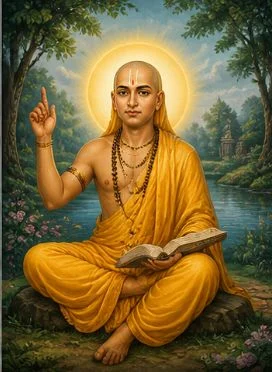
द्वैताद्वैत · Dvaitadvaita · Dual-non-dualism
Nimbarkacharya
11th–12th century CE (debated; some place him as early as 7th century) Vaiduryapattanam (Andhra Pradesh, traditional)
God, soul, and world are simultaneously different and non-different - like a wave that is neither identical to the ocean nor truly separate from it.
The teaching
The relationship between Brahman and individual soul is bhedabheda - both difference and non-difference, equally real. Worship is centred on Radha-Krishna as the divine couple (Yugala-Sarkar); they are inseparable. Bhakti is the means; surrender (atmanivedana) is the goal. The path is gentler than Madhwa and warmer than Shankara.
Major works
- Vedanta Parijata Saurabha - commentary on the Brahma Sutras
- Dasha Shloki - ten verses summarising his philosophy
- Krishna Stavaraja - devotional hymn
What he changed
- First major acharya to centre worship on Radha-Krishna as a couple (predating the Gaudiya tradition of Chaitanya by centuries)
- Founded the Nimbarka Sampradaya, one of the four traditional Vaishnava sampradayas (Sri / Brahma / Rudra / Sanaka)
Living lineage today
The sampradaya is headquartered at Salemabad (Rajasthan) and Vrindavan. Currently led by the Sri Nimbarkacharya peethadhipati at Salemabad.
Where to read more
- Roma Bose · "Vedanta Parijata Saurabha - translation" (Royal Asiatic Society of Bengal)
- M. Bhandarkar · "Vaisnavism, Saivism and Minor Religious Systems" (Motilal) - chapter on Nimbarka
Other acharyas
Adi Shankaracharya →
Advaita Vedanta · Pure non-dualism
Ramanujacharya →Vishishtadvaita · Qualified non-dualism
Madhwacharya →Dvaita · Dualism
Vallabhacharya →Shuddhadvaita · Pure non-dualism (with grace)
Chaitanya Mahaprabhu →Achintya Bhedabheda · Inconceivable difference and non-difference
Abhinavagupta →Trika · Kashmir Shaivism (non-dualistic)
Basavanna →Lingayat / Veerashaiva
Vidyaranya →Advaita Vedanta